Hawaii facts for kids
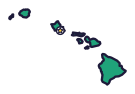
Hawaii is the Aloha State (say huh-WY-ee; in Hawaiian it’s Hawaiʻi). It’s a chain of islands in the Pacific Ocean. Its volcanoes are active, humpback whales come every winter, and it has the only official royal home in the United States.
Quick answers
- Where is Hawaii?
- Hawaii is a chain of islands in the Pacific Ocean, in the West region, far to the southwest of the other states.
- What is the capital of Hawaii?
- Honolulu. It’s also the biggest city.
- Does Hawaii touch the ocean?
- Yes, all around. Hawaii is a chain of islands in the Pacific Ocean.
- How big is Hawaii?
- 10,932 square miles. It’s the 43rd biggest of the 50 states.
Hawaii at a glance
- Capital
- Honolulu
- Nickname
- The Aloha State
- Region
- West in Map Otter. The US Census Bureau puts it in the West.
- Became a state
- August 21, 1959, the 50th state
- Biggest city
- Honolulu
- Size
- 10,932 square miles, the 43rd biggest
- People
- About 1.4 million (2025), the 40th most
- Neighbors
- No other states: Hawaii is a chain of islands in the Pacific Ocean.
Where is Hawaii?
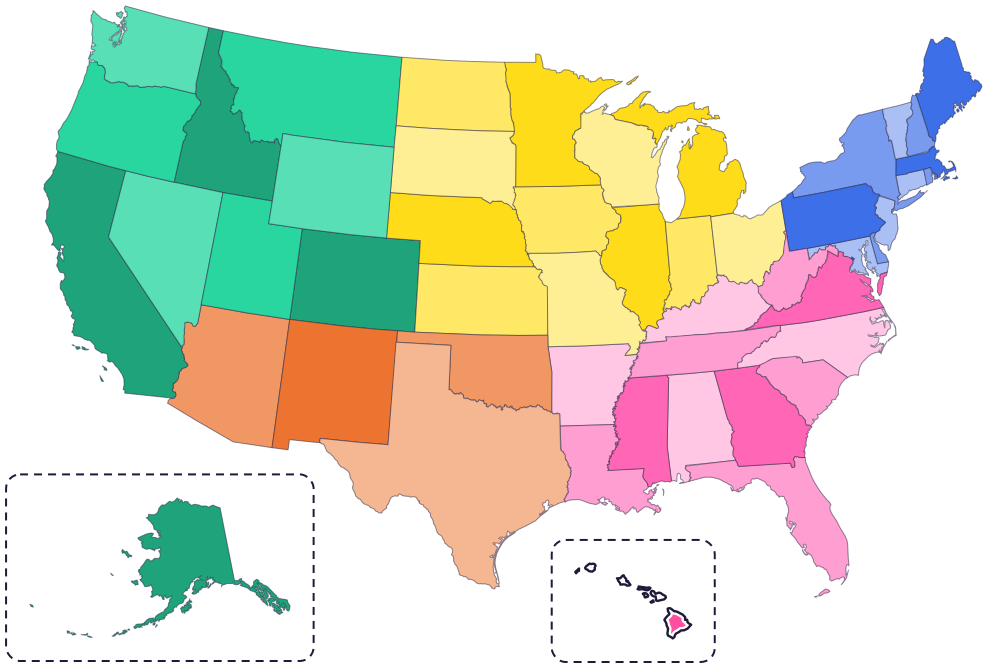
Hawaii is a chain of 137 islands in the middle of the Pacific Ocean, about 2,400 miles from the West Coast of the mainland United States. Eight of them are the main islands. Hawaii doesn’t touch any other state.
Because it’s so far away, Map Otter’s map shows Hawaii in its own box along the bottom. (Alaska has a box too, at the bottom left.)
Fun facts
- 1
Hawaiian monk seals live in the Hawaiian Islands and nowhere else on Earth. They are one of the most endangered seals in the world.
- 2
In the 1950s, there were as few as 30 nēnē, or Hawaiian geese, left in the wild. Today there are several thousand, and the nēnē is the state bird.
- 3
Every winter, thousands of humpback whales swim to Hawaii’s warm, shallow waters to mate, have their babies and raise them. More than half of the North Pacific’s humpbacks come here.
- 4
Hawaii’s law that pays people to recycle bottles and cans started as an idea from students on the island of Molokaʻi. It became law in 2002.
- 5
The state seal has eight taro leaves, one for each of the eight main Hawaiian Islands.
Places to know
Hawaiʻi Volcanoes National Park
Island of Hawaiʻi
The park covers the tops of Kīlauea and Mauna Loa, two of the world’s most active volcanoes. Kīlauea has sacred Hawaiian cultural sites that go back centuries.

ʻIolani Palace
Honolulu, Oʻahu
King Kalākaua built this palace in 1882. It was the home of Hawaii’s last reigning king and queen, Kalākaua and Liliʻuokalani, and it’s the only official royal home in the United States.
Haleakalā National Park
Maui
This park has bare, rocky volcanic land, and visitors can get a permit to watch the sunrise from the summit. The silvery ʻāhinahina, or silversword, blooms here, and some of the park’s endangered plants and animals live nowhere else.
Hawaii long ago
Before the first Europeans arrive in 1778, Native Hawaiians live in a highly organized society that provides for itself and shares the land, with a rich language, culture and religion.
Kamehameha I unites the Hawaiian Islands under one government and becomes the first King of Hawaii.
On January 17, a Committee of Safety that represents American and European sugar planters, descendants of missionaries and financiers overthrows the Hawaiian monarchy of Queen Liliʻuokalani. The day before, the US Minister to Hawaii and US naval officers had sent armed US naval forces ashore to take up positions near the government buildings and ʻIolani Palace.
The United States annexes Hawaii. In 1900, Hawaii becomes a US territory.
On August 21, Hawaii becomes the 50th state.
The US Congress apologizes to Native Hawaiians for the overthrow of the Hawaiian Kingdom.
State symbols
- State mammalHawaiian monk sealsince 2008
- State birdNēnēsince 1957
- State sealKamehameha I, Liberty and a rising sunsince 1959
- Official languagesEnglish and Hawaiiansince 1978
Tricks to remember Hawaii
- Look for the box. On Map Otter’s map, Hawaii sits in its own box along the bottom, because it’s far out in the Pacific Ocean.
- The biggest island is at the end. The main islands run in a line from northwest to southeast. The biggest one, the Island of Hawaiʻi, is at the southeast end.
- Honolulu is on Oʻahu. The capital is on Oʻahu, between Kauaʻi and Molokaʻi.
- Eight leaves, eight islands. The state seal has eight taro leaves, one for each main island.
To practice, print a blank US map and color in Hawaii, or find it in the 50 states quiz. Then try today’s mystery state: guess it from its shape, with a clue after each miss.
Teaching all 50? Read how to teach kids the 50 states and what age kids learn the states and capitals, or follow our free 36-week homeschool geography plan.
Hawaii in Map Otter
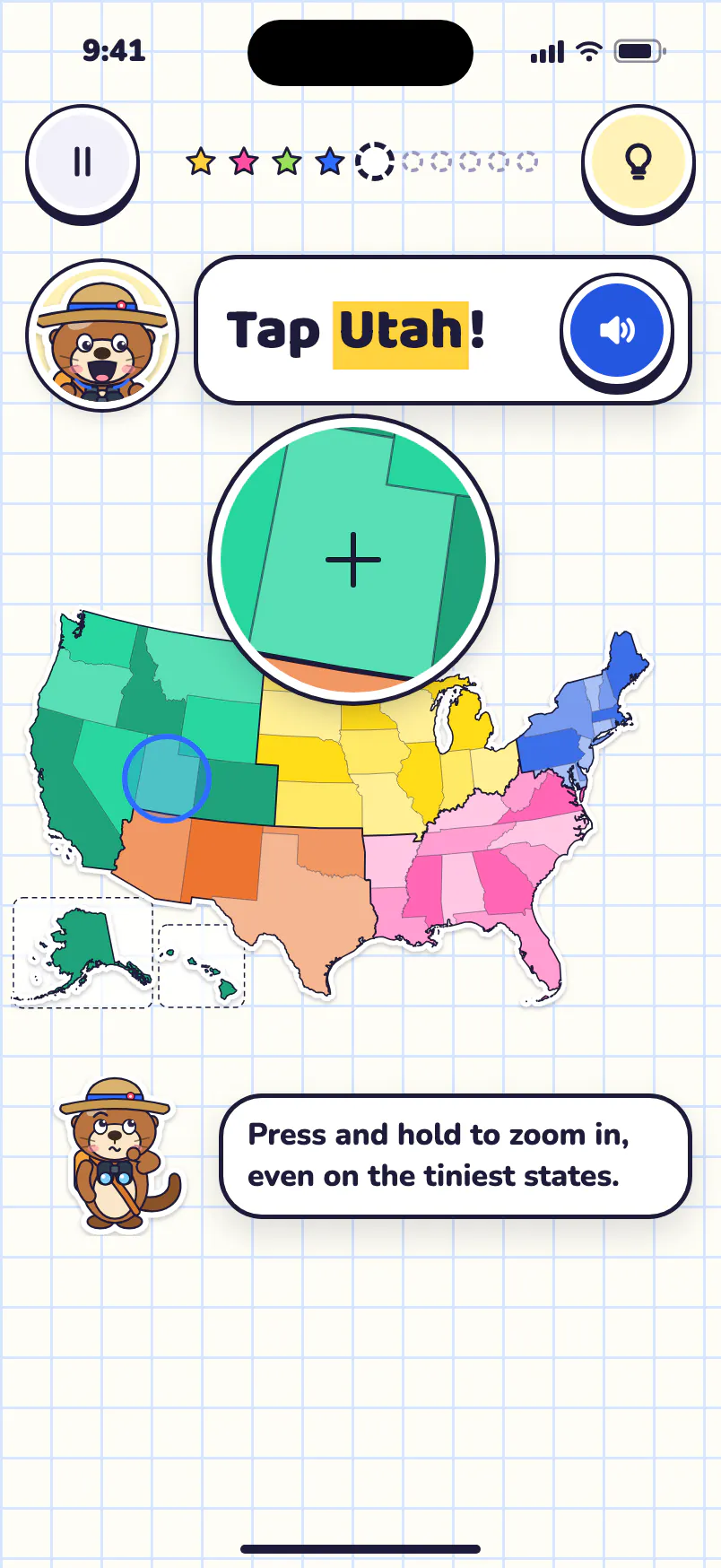
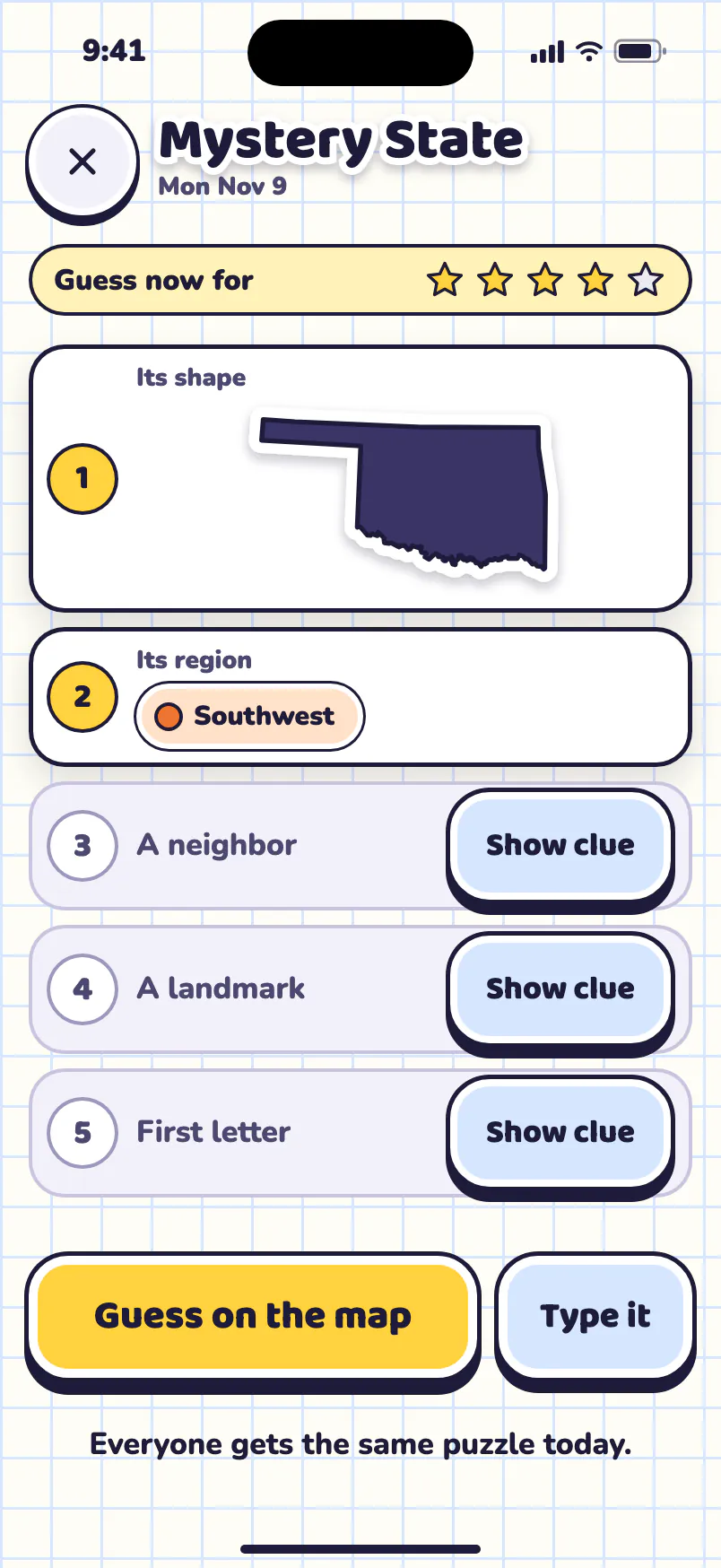
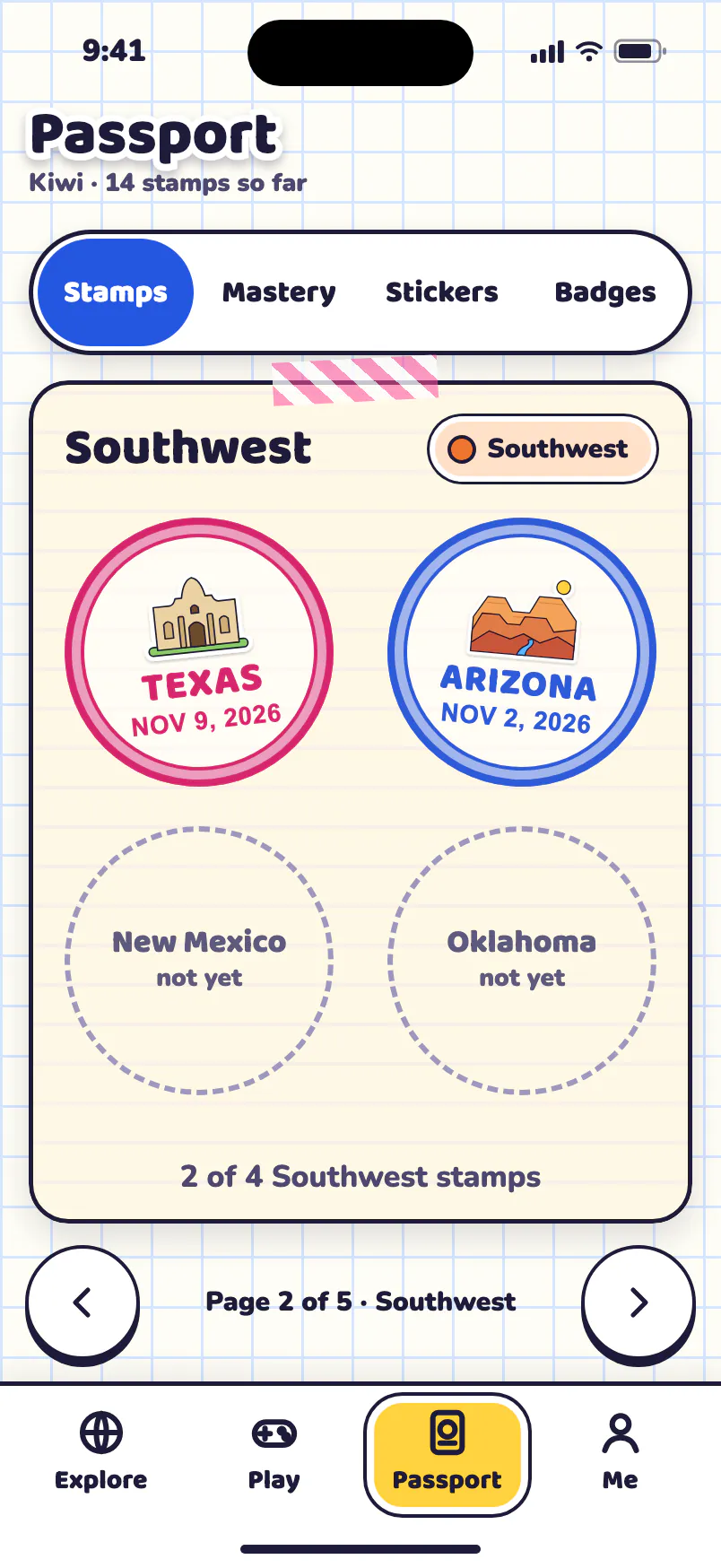
In Map Otter, kids find Hawaii on the map, learn its capital, and collect its stamp in their passport, with Otto guiding the way. These screenshots show how it looks with a few example states.
Map Otter is coming soon to iPhone, iPad, Android phones and tablets, and Chromebooks.
Questions kids ask
What is the capital of Hawaii?
Honolulu, on the island of Oʻahu. It’s also the biggest city.
Was Hawaii always part of the United States?
No. Hawaii was its own kingdom, united under Kamehameha I in 1810. The kingdom was overthrown in 1893, the US annexed Hawaii in 1898, and it became the 50th state in 1959.
Does Hawaii have its own language?
Yes. English and Hawaiian are both official languages of Hawaii.
Why is Hawaii in a box on the map?
Hawaii is far out in the Pacific Ocean. Showing it in a box along the bottom lets it fit on the same map as the other states.
Where these facts come from
- US Congress: Public Law 103-150 (1993), on the overthrow of the Kingdom of Hawaii
- Hawaii Legislative Reference Bureau: the Hawaii State Constitution
- Hawaii Legislative Reference Bureau: the state seal
- Hawaii State Archives
- Hawaii Legislature: state mammal (HRS 5-12.5)
- NOAA Fisheries: Hawaiian monk seal
- Hawaii Division of Forestry and Wildlife: nēnē
- National Park Service: nēnē (Hawaiʻi Volcanoes)
- NOAA: Hawaiian Islands Humpback Whale National Marine Sanctuary
- Hawaii Legislative Reference Bureau: students help write laws
- National Park Service: Hawaiʻi Volcanoes National Park
- ʻIolani Palace (State of Hawaiʻi Museum of Monarchy History)
- National Park Service: Haleakalā National Park
- Hawaii Division of Forestry and Wildlife: the nēnē became the state bird on May 7, 1957
- Hawaii Department of Business, Economic Development and Tourism: Hawaii facts and figures
- US Census Bureau: state area measurements
- US Census Bureau: state population estimates, 2020 to 2025
- US Census Bureau: city and town population estimates, 2020 to 2025
- US Senate Manual: ratification of the Constitution by the 13 original states
- US Senate Manual: states admitted into the Union
- US Census Bureau: census regions and divisions
- NOAA Office for Coastal Management: shoreline mileage of the United States