
Virginia facts for kids
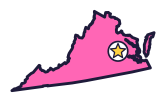

Virginia is the Old Dominion (say ver-JIN-yuh). English settlers started Jamestown here in 1607, and the last major battle of the Revolutionary War was fought here. Every July, wild ponies swim to a nearby island.
Quick answers
- Where is Virginia?
- Virginia is in the Southeast region of the United States. It touches five states: Kentucky, Maryland, North Carolina, Tennessee and West Virginia, and it borders Washington, D.C.
- What is the capital of Virginia?
- Richmond. The biggest city is Virginia Beach.
- Does Virginia touch the ocean?
- Yes. Virginia has a coast on the Atlantic Ocean.
- How big is Virginia?
- 42,775 square miles. It’s the 35th biggest of the 50 states.
Virginia at a glance
- Capital
- Richmond
- Nickname
- The Old Dominion
- Region
- Southeast in Map Otter. The US Census Bureau puts it in the South.
- Became a state
- June 25, 1788, one of the 13 original states (the 10th to approve the Constitution)
- Biggest city
- Virginia Beach
- Size
- 42,775 square miles, the 35th biggest
- People
- About 8.9 million (2025), the 12th most
- Neighbors
- Washington, D.C., Kentucky, Maryland, North Carolina, Tennessee and West Virginia
Where is Virginia?
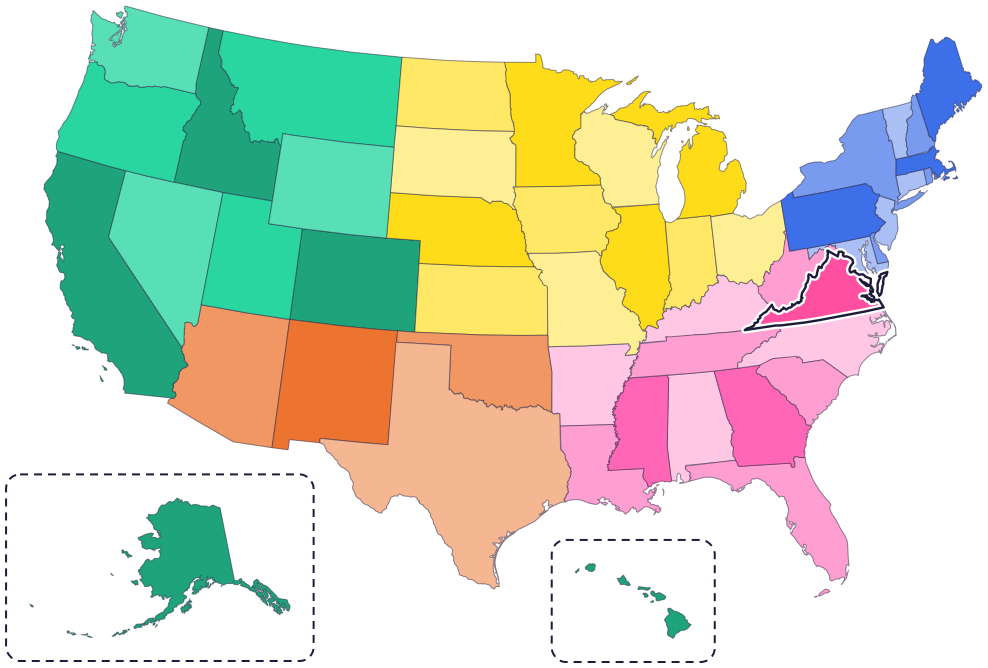
Virginia is in the southeastern part of the country, on the Atlantic coast. It touches five states and Washington, D.C.: Maryland and Washington, D.C. to the northeast, West Virginia to the northwest, Kentucky to the west, Tennessee to the southwest and North Carolina to the south.
The Potomac River runs along much of its border with Maryland and Washington, D.C. To the east are the Chesapeake Bay and the Atlantic Ocean. Across the bay, Virginia’s Eastern Shore sits at the bottom of a peninsula it shares with Maryland and Delaware.
Fun facts
- 1
The last major battle of the Revolutionary War was at Yorktown in 1781. In 1865, General Lee’s surrender at Appomattox Court House signaled the end of the Civil War.
- 2
The American dogwood is both Virginia’s state flower and its state tree.
- 3
The American Kennel Club calls George Washington the Father of the American Foxhound, Virginia’s state dog.
- 4
Virginia’s state fossil, a scallop called Chesapecten jeffersonius, was the first fossil from North America to be described by scientists, in 1687.
- 5
The idea for a state snake was first suggested by an 11-year-old student. In 2016, the eastern garter snake got the job.
Places to know

Historic Jamestowne
Jamestown
Walk where the English settlement of 1607 began, in the steps of Captain John Smith and Pocahontas. After a hard start, the small settlement grew into a big colony.

Shenandoah National Park
About 75 miles from Washington, D.C.
Skyline Drive runs for 105 miles through the park, past waterfalls and more than 60 peaks over 3,000 feet high. Deer and black bears live here.
Assateague Island
The Eastern Shore, next to Chincoteague Island
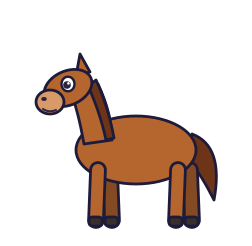
Wild ponies live on this island. Each July, during Pony Penning, the Virginia herd swims across to nearby Chincoteague Island. The Chincoteague pony is Virginia’s state pony.
Virginia long ago
People are living in what is now Virginia. Virginia Indians still live here today, and they say, “We have always been here.” The state recognizes 11 tribes.
Three English ships bring the first permanent English settlers to Jamestown. As the colony grows, Virginia Indians are pushed out of their homeland.
On July 30, Virginia’s first elected lawmakers meet in the church at Jamestown. The same year, the first enslaved Africans arrive in English North America, at Point Comfort, where Fort Monroe stands today.
Virginia’s lawmakers vote to move the capital from Williamsburg to Richmond.
On June 25, Virginia approves the US Constitution and becomes the 10th state.
A court case that began with a strike by 400 students in Farmville becomes part of Brown v. Board of Education. On May 17, the Supreme Court rules against school segregation.
State symbols
- State dogAmerican foxhoundsince 1966
- State birdNorthern cardinalsince 1950
- State batVirginia big-eared batsince 2005
- State snakeEastern garter snakesince 2016
- State ponyChincoteague ponysince 2023
Tricks to remember Virginia
- Find the wedge. Virginia is wide at the coast and narrows to a point in the far west, like a wedge of cheese.
- Don’t forget the Eastern Shore. Across the Chesapeake Bay, the tip of a peninsula belongs to Virginia too.
- Richmond is east of the middle. Head from the center of Virginia toward the coast, and you’ll reach the capital on the James River.
- Two Virginias. West Virginia sits on Virginia’s northwest side. They were one state until 1863.
To practice, print a blank US map and color in Virginia, or find it in the 50 states quiz. Then try today’s mystery state: guess it from its shape, with a clue after each miss.
Teaching all 50? Read how to teach kids the 50 states and what age kids learn the states and capitals, or follow our free 36-week homeschool geography plan.
Virginia in Map Otter
In Map Otter, kids find Virginia on the map, learn its capital, and collect its stamp in their passport, with Otto guiding the way. These screenshots show how it looks with a few example states.
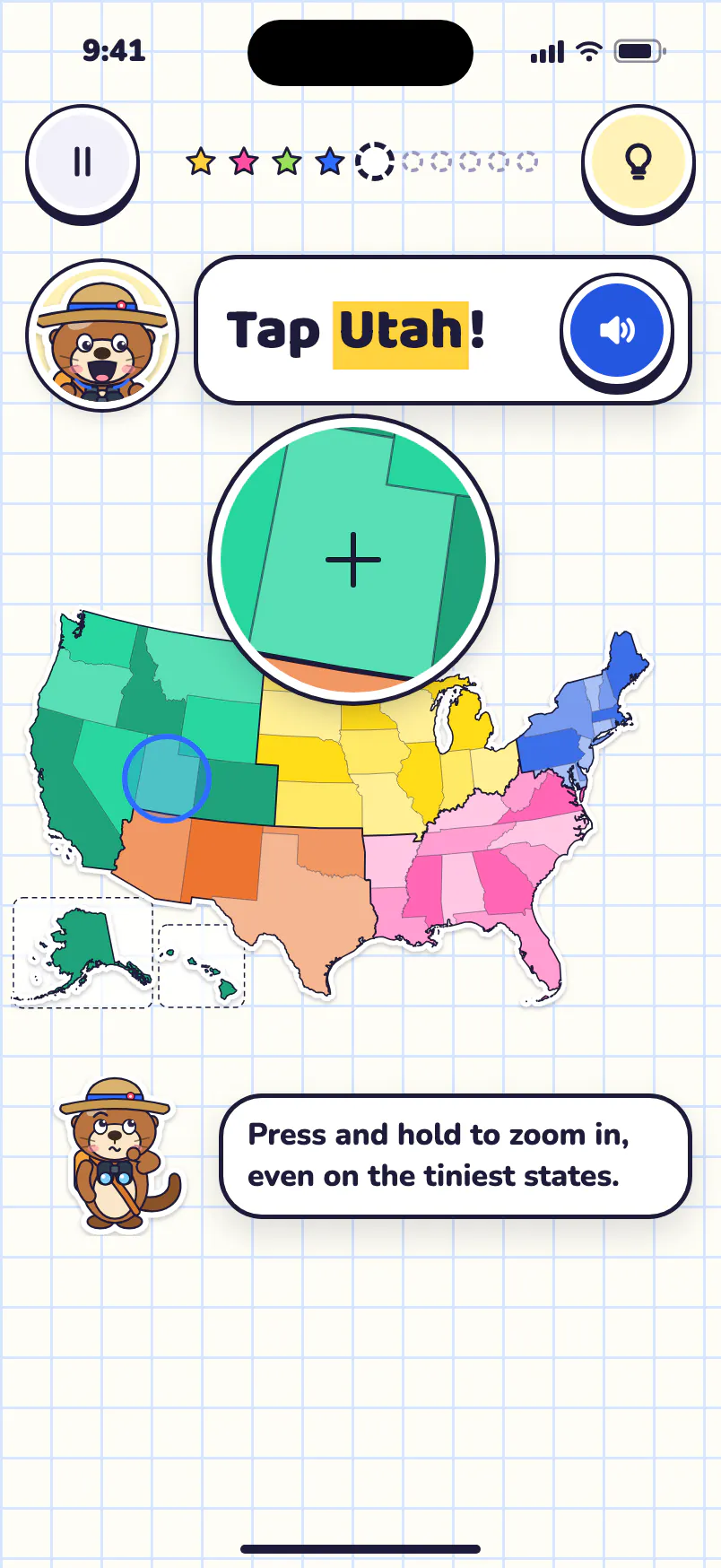
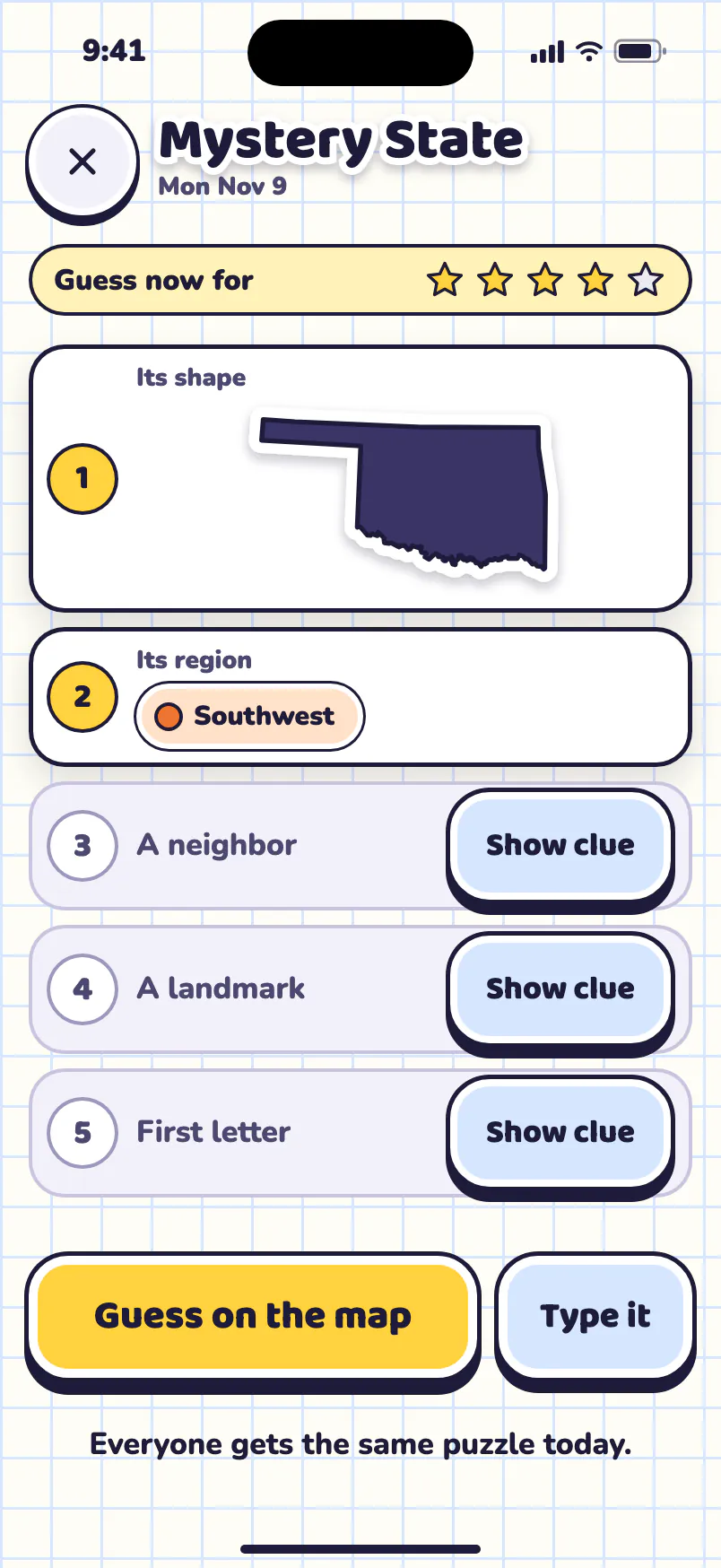
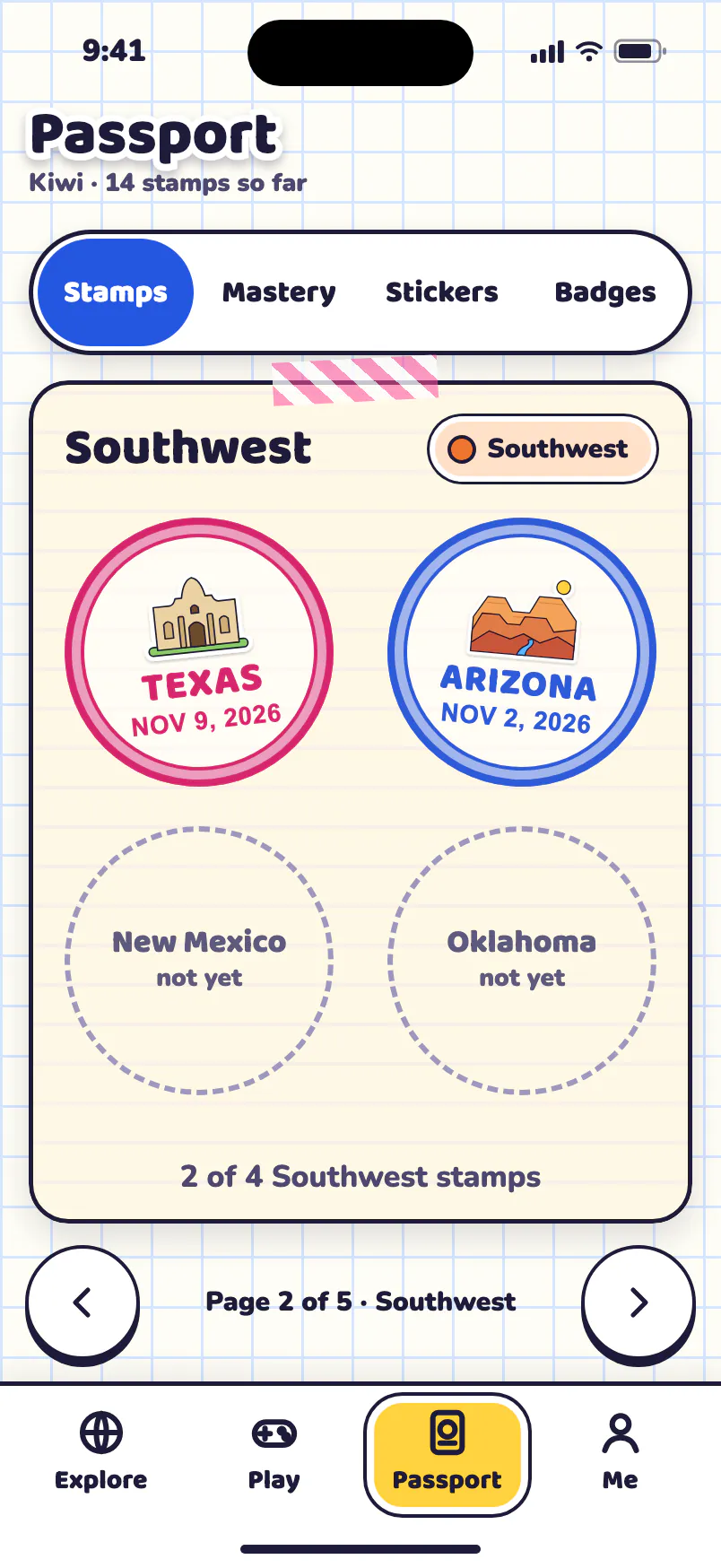
Map Otter is coming soon to iPhone, iPad, Android phones and tablets, and Chromebooks.
Questions kids ask
What is the capital of Virginia?
Richmond. The capital moved there from Williamsburg in 1779. Thomas Jefferson designed the Capitol, and lawmakers have met in it since 1788.
Where did the first permanent English settlers live?
At Jamestown, starting in 1607. Today you can walk where they lived, at Historic Jamestowne.
Are Virginia and West Virginia the same state?
No. They were one state until 1863, when the western part became West Virginia, the 35th state.
What is the biggest city in Virginia?
Virginia Beach, on the Atlantic coast.
Where these facts come from
- Code of Virginia 1-510: official emblems and designations
- Virginia General Assembly, Capitol Classroom: state emblems
- National Park Service: Yorktown Battlefield
- National Park Service: Appomattox Court House
- National Park Service: Historic Jamestowne
- National Park Service: Shenandoah National Park
- National Park Service: the horses of Assateague Island
- Commonwealth of Virginia: Native American Heritage Month
- National Park Service: the first legislative assembly
- National Park Service: Fort Monroe
- Virginia General Assembly, Capitol Classroom: about the Capitol
- National Park Service: the five Brown v. Board cases
- National Park Service: Brown v. Board of Education
- Secretary of the Commonwealth of Virginia: history and facts on Virginia
- US Census Bureau: state area measurements
- US Census Bureau: state population estimates, 2020 to 2025
- US Census Bureau: city and town population estimates, 2020 to 2025
- US Senate Manual: ratification of the Constitution by the 13 original states
- US Senate Manual: states admitted into the Union
- US Census Bureau: census regions and divisions
- NOAA Office for Coastal Management: shoreline mileage of the United States